What can the Nets learn: Houston Rockets Edition

The Nets offseason continues to march on.  Will Deron Williams finally be gone? Is Joe Johnson traded to a contender for multiple parts? Are Brook Lopez and Thaddeus Young back next year? We can guess the answers to these questions but will not get answers for some time.

In the meantime, as the Nets chart their course to try to get back to contention, they should look to the contenders above them, and learn from those teams’ smart decisions.

Today’s review? The Houston Rockets.

Lesson One: Spread the Floor for Threes

The phrase “you live by the three, you die by the three” has become overused.  Perhaps in the past, when the league was run by elite post play, and teams lacking such elite threats hoped to take those bigs down with random hot streaks from 3, the phrase had utility.  But today, it does not hold that type of water.  The best teams in the league attack, using guards and smaller forwards, off the dribble.  By creating holes in the defense, and forcing teams to rotate off the 3 point arc, they set up open 3’s (which is really no different than a big creating open 3’s when he draws a double inside: the only difference is the method, not the result).

Overall, the idea a team is a “jump shooting team” that cannot win in the playoffs because it takes threes? Remember when the Warriors were that two weeks ago? If a team built around an elite center produces open 3’s and that’s praised as “playing inside outside,” why aren’t threes created by dribble penetration called that?

Houston led the league this season, taking 32.7 threes per game.  That did not stop them from going 56-26, getting through a playoff bracket that includes the Clippers and Spurs, and winning a division that includes the Spurs, Grizzlies, and Mavericks.  Houston is a great team, or at a minimum, a very very good one, and are better than any Nets team since 2003.

Wide open threes are great shots, and Houston excels at creating them using James Harden as the fulcrum of their pick and roll attack.  15.5% of Houston’s shots this year were three pointers with no defender within 6 feet (“wide open” shots), a figure which ranks second in the league, according to NBA.com’s stats page. To add to that, 15.9% of their shots were threes with no defender within 4 feet (“open” shots), a figure leading the league per NBA.com’s stats page.

The implications:  wide open threes are great shots, and Houston is extremely efficient at creating them.  The NBA’s best offense (per NBA.com stats), the Clippers, scored 1.098 points per possession this season.  It’s 10th best offense, the Bulls, scored 1.047 points per possession.

The Nets? They shot 35.6% on wide open 3’s this season, a figure which itself would have generated the league’s 6th best offense, but only ranked 21st in generating these looks.  The top 8 teams at generating wide open threes? The Hawks, Rockets, Clippers, Blazers, Warriors, Spurs, Sixers, and Cavs.  The bottom 8? The Lakers, Timberwolves, Wizards, Knicks, Grizzlies, Hornets, Nuggets, and Pacers.  The correlation those numbers display between the creation of wide open 3’s, and the production of wins, is clear (sure, the Sixers, Grizzlies, and Wizards are anamolies, but one of those teams has two elite post players in a league with maybe ten of those players, one was criticized all year for its antiquated offense, and one is the Sixers).

The Rockets were successful all year, and in the playoffs, because of their three point attack.  With Harden creating up top, forcing defenses to send two players at him (at least) to play his stepback and drive, and to guard the roll man off his pick and rolls, that created constant daylight for shooters.  That daylight made the Rockets’ attack sustainable no matter the injuries suffered: the attack always was Harden at the top, a roll man capable of finishing, shooters spacing the floor, and good defensive team concepts on the other end.  Whoever went down, the crux of the formula was always in place.  Was it boring? Probably, but it was also successful.

What can the Nets learn from the Rockets? Look to acquire players who can create space for shooters off the dribble drive, and surround that attack with shooters who can hit their open shots.  The Nets have some of the latter, but none of the former.

LESSON TWO: YOU CAN BECOME A CONTENDER WITHOUT TANKING

Sam Hinkie has succeeded in making 2013 the era of “is tanking moral” and “do teams tank too much because they need to in order to win.”

One issue the Nets have in their rebuild (or reconstruct): they cannot tank.  With their picks through 2018 either out of their possession, or being swapped with other franchises, the Nets cannot decide to bottom out and draft star talent in the lottery to make their way to the top. They have to rebuild from the middle.

The Rockets? While Daryl Morey and Billy King are certainly different people (in their valuing of picks, approach to analytics, etc), the Rockets do serve as a model for rebuilding from the middle. Like the Nets (albeit at a higher, less hopeless level), the Rockets, upon the underwhelming McGrady-Yao era (relative to expectation), switched gears and looked to become flexible to build around a new core.  But in doing that, this was their record by season:

-2009-2010: 42-40

-2010-2011: 43-39

-2011-2012: 34-32

-2012-2013 (year 1 with Harden); 45-37

Then, from there, Houston took off into 54-56 win territory.  Still, look at those records.  Houston got Harden and Howard, but they never bottomed out. They hung around as a mediocre, lottery franchise, on the supposed “treadmill of mediocrity.” But they did it with flexibility, such that if a chance to leave the treadmill came about, they could pounce on that chance.  They eventually did with the Harden trade, and that trade led to Dwight wanting to be a Rocket, which led to the stable of veterans around them deciding to partake in things.

The Nets surely are unlikely to get players of either star’s caliber: surely not this summer, and perhaps not next summer either.  However, the Nets in the summer of 2016 will be similar to the Rockets in 2010: they will be a mediocre team, with flexibility.  There is nothing wrong with retaining that flexibility until the right opportunity comes about, being mediocre for a little while, as the Rockets did for three years (and they were prepared for a 4th, they did not get Harden until Halloween, on the eve of 2012-2013, a player acquisition like that, at that time, is unprecedented), biding their time as a mediocre team until the chance for franchise changing talent presents itself, all the while not falling into the lottery (which the pick situation renders hopeless).

The Rockets were contend with spinning assets into assets, trekking along with decent talent until better talent became available to them. There is nothing wrong with the Nets, if 2016 does not bring Durant or some other star, taking a similar course of action.

LESSON 3: WHEN THE PLAN DOES NOT GO AS PLANNED, SWITCH GEARS

Daryl Morey is the master of this, and this is an area where Brooklyn flat out needs to be better.  In 2010, the Rockets decided, like the Nets and others, that it was time to use that summer to build a champion.  When rebuffed by Chris Bosh and others, they did not panic sign plan B type talent just to say they did something, but they switched gears, largely keeping their team intact in the hopes of doing something grand in another year. The Nets do NOT need to overpay B level talent in 2016 if they strike out on the A class talent, just to say they did something.

More notable was 2012, and this past summer in Houston. In 2012, the Rockets were dead set on acquiring Dwight. He rejected them.  So rather than panic add a plan B, they totally shifted gears, dealing Kyle Lowry for a lottery pick and allowing Goran Dragic to walk to acquire flexibility. The Rockets quite literally went from shooting for 55 wins, to trying to bottom out, because of a change in the market. Their plan shifted gears.  This is oft forgotten because of the Harden trade in 2012, but that was a fluke (a fluke the Lowry deal helped, as that pick was added to the Harden package).

Then this summer, the Rockets nearly acquired Bosh, knowing full well a Harden-Dwight-Bosh-Parsons core could win 60 games (another note: Bosh and Dwight went from disinterested in Houston, to very much interested: the Nets should not worry if free agents rebuff their advances; by creating a winner you change the perception).

What happened when Bosh chose to stay in Miami? Morey shifted gears: he then decided it did NOT make sense to keep Parsons. It was one thing to lose future flexibility when adding Bosh to form that quartet. The creation of a juggernaut justifies throwing away flexibility? To lose it just to keep Parsons? Suddenly, you have locked yourself into a limited ceiling. Morey then said goodbye to Parsons, and acquired Ariza and others on more flexibility friendly deals.

The Nets do not shift gears enough. The Boston trade? If Deron was the Utah Deron, or if his name was Chris Paul, that trade, in all sincerity, would have been smart. It would have nuked the future, but when an opportunity to create an elite contender comes to you, that’s an ok price you pay.  Once Deron’s body betrayed him, the Nets should have shifted gears and went another way.

And in 2016, if the Nets fail to score their targets, they should not panic add lesser targets just to sell some merchandise. Shift gears and go in another direction.

The Nets can learn a lot from a 56 win team in the conference finals in the Houston Rockets.  Will they?
What the Nets can learn: the Golden State Warriors edition

The Brooklyn Nets have officially settled into their offseason. And needless to say, it is a critical one.  Brook Lopez and Thaddeus Young are free agents.  The Nets want to spend in 2016. But they want to pay Lopez and Young. They have $45 million (approximately) invested in a backcourt they do not want. The Nets want 2016 fireworks but face 2015 conflict and questions.

Clearly, things have not gone to plan for the Nets in Brooklyn. But, remember.  The Cavaliers were a 33-49 mess just last year, the Warriors a lottery team in 2012, the Rockets a middling team seen as incapable of grabbing stars in 2012.  Fortunes can change, and change quickly.  Do the Nets do not have a developing Steph Curry, the hope the league’s best player is a Brooklynite, or the asset trove Houston used to trade for James Harden? No.  But, there are still pages the Nets can take from the books of the teams that have gone further than them this year, in the hopes they can do something similar three years down the line.

This piece takes on the Warriors.

Sports VU: Per NBA.com Stats, the Warriors led the NBA in shots taken where the ball handler had the ball for just 0-2 seconds.

When the Warriors play, the ball move.  Not just that, the players move.  Players set screens.  Steph Curry and Klay Thompson run around those screens.  The defense is forced to constantly rotate.  As shown by this stat, when players get the ball, they do not hold it. They make quick decisions: I will shoot this jumper, or I will pass, or I will dribble and get to the rim.

The NBA loves the narrative of its being a “superstar league.” And without a doubt, Curry is a superstar.  But so is Russell Westbrook, and the Thunder are a lottery team.  The Warriors only have one superstar.  46% of Thompson’s shots this season came without a single dribble: he is a very good player, but is not a creator of offense for others. Rather, he is a tool who enhances the offense with his catch and shoot ability (and good, but not great, ability to make plays off the bounce).  Draymond Green? He takes even more of his shots as a catch and shoot or quick hitter option, rather than making plays off the dribble for himself.

The Warriors are proof, as talented as you are, that multiple superstars are not a necessity offensively.  Everyone in Golden State is good, there is no doubt.  But Curry is the only superstar on the team, which is a team full of talent, but only one top 15-25 player.

Perhaps more importantly, the Warriors are filled with skilled passers, an underrated asset on a contender.  Curry, Thompson, Green, and Bogut are all plus passers at their positions.  Passing, notably, is a skill not seen in the box score, so finding talented passers among the league’s fringe players could be an exploitable market inefficiency for Brooklyn.

The Nets, if they can build a roster of players who can shoot, pass, and while are not superstars, are good enough to attack the openings and gaps created by a team oriented offense like Golden State’s, can turn their fortunes.

The Eye Test: Defensive Versatility is Huge in the Modern NBA; the Warriors Have it and the Nets Don’t

Commonly, defense is associated with big men.  However, the modern NBA is not built around the behemoth bigs of the 1980’s and 1990’s.  The centers remaining in the playoffs: “undersized” (Horford), “clutsy” (Mozgov), elite but playing injured (Dwight), and a once “bust” at number one overall (Bogut).

Yes, rim protection is important.  But the single most important thing to an NBA team defensively is the ability of multiple players to guard multiple positions.  The dribble drive and pick and roll is a staple of any good NBA offense: the constant switching makes it imperative for players to … switch.  You are at a disadvantage defensively if a player cannot switch onto another position.

The best defenses are built around the ability to guard multiple positions, and you can begin to build a contender by acquiring players who can do just that.  The Warriors have Draymond Green, Shaun Livingston, Andrew Bogut, Andre Iguodala, and Klay Thompson are all plus defenders, who guard multiple positions.  It allows Golden State to switch seamlessly. Let a 4 guard a 2. Let a 3 guard a 5.  That second the offense loses when you switch is the difference between shooting a gap, and closing the gap.  Even the 2013-2014 Nets carved a decent defense together — an old team in a young, fast league — because in Livingston, Paul Pierce, and Joe Johnson at similar sizes, they had developed some of that interchangeable personnel defensively.

The Nets should look into acquiring players who can guard multiple positions.  The size of the names does not matter: there are many nondescript names in these conference finals as bigger names watch from home.

Roster Building: Forget What the Fans Say and Don’t Do it All At Once

It seems that the 2010 summer in Miami has created the idea among fans — and among a few too many organizations (ahem, Nets), that the way to build a team is simple: open cap space, enter free agency, sign a bunch of superstars, and you’re in!

It’s not that simple.  A look at all of the teams remaining in the playoffs, particularly the Warriors, show that there is no real need to acquire a superstar in free agency in order to build a contender.  Taking LeBron’s teams out of the equation, look at how the contenders of recent seasons have built: primarily through drafting their personnel, using assets in deals, and smart and selective free agency signings (as opposed to the bigger signings).

Take a look at how the Warriors were built:

2009: they drafted Curry.

2010: they signed David Lee. Ironically, the one time they decided “let’s open up cap space and sign a big name” resulted in the roster’s lone albatross.

2011: they drafted Thompson

2011-2012: they traded Monta Ellis for Andrew Bogut-more on that below

2012: they drafted Harrison Barnes and Draymond Green.  This is a note that all draft picks matter. Sure, many second rounders flame out. But if you hit paydirt, you can get an excellent, supremely cost controlled piece

2013: they sign and traded for Marreese Speights and Andre Iguodala. Yes, that was a large free agency strike. But it came after the methodical building of a roster, ground up.  It came after patience. It was a supplement to a core, rather than trying to build an entire core through free agency.

2014: they signed Livingston and Leandro Barbosa.  Again, free agency was used as a tool to round out a core, not completely built from ruins.

The takeaways.  Sure, one obvious one is that the idea contenders do not draft their talent is totally false: Curry, Thompson, Green, and Barnes were drafted by the Warriors, and Bogut was acquired for Ellis, whom they drafted.

But the other takeaway are what matter to the Nets almost as much.  The Warriors did not enter a summer and decide, “we have to make a splash. We have to sign a superstar.”  They built the methodical way, rather than fixating on stars.  They essentially added 1-2 rotation pieces a year, until they got the pieces they wanted. There is no mandate that the Nets have to sign Durant in 2016. Sure: it would be nice. But it is not mandated.

Rather than heading into free agency with no talent (allowing Brook and Young to walk for cap room, etc) and saying “we can have all the stars”!, the Nets should be patient. Keep Lopez. Keep Young. Keep Bogdanovic.  Maybe even resign Johnson in 2016 to a much smaller deal than his current one (maybe), if it makes sense.  Durant says no to Brooklyn? (it’s highly unlikely he signs here). Add a free agent, maybe 2, that fit the core. You need athletes? Add athletes. You need a point guard. Add an affordable, sensible point guard with quickness that the roster lacks.  It will not make a splash. It will not win free agency.

But guess what. The Warriors entered the 2010 sweepstakes and got David Lee. They entered the Dwight sweepstakes and lost to Houston. They entered the Kevin Love sweepstakes and lost to Cleveland. It doesn’t matter who wins the headline, or the free agent sweepstakes. The Warriors are 67-15 and 2 games from the finals. You can have your headlines.

The Bogut-Ellis trade. That is a reminder to the Nets: do NOT worry about what the fans want this summer or in 2016. Do not shape personnel decisions around fan desires, what will sell the most merchandise, or what is easiest to package to fans in a season ticket renewal package. Just consider one issue: what move is best for us in our goal to build a sustainable winner.  Warriors fans booed Joe Lacob off stage when he traded Ellis for Bogut. Ellis was a huge fan favorite.  He also took grief for that matter when he fired Mark Jackson.

Funny. I don’t see any of the complaining Warriors fans of 2012 and 2014 complaining now.

Can the Nets replicate what the Warriors have done? Probably not.  But they can learn from their focus on multiple willing passers who guard multiple positions, and their prioritization of methodical, piece by piece roster building over one huge summer strike.

Nets Offseason: Basic Questions

The Brooklyn Nets Offseason has officially begun, and here is a basic outline.

Nets Under Contract: Deron, Joe, Jack, Bojan, Karasev, Plumlee

Free Agents: Brook (player option), Thad (player option), Mirza (restricted free agent), Anderson (player option), Markel (team option), Jefferson (team option), Jordan (restricted free agent), Clark (team option), Morris (team option).

Cap Space: $7.7 million, but only if every single free agent was renounced, and left.  If one of Brook or Thad stays, the Nets have no cap space.  So, in short, the Nets will likely be limited to cap exceptions and minimum salaries on the trade market.  Beyond that, the primary resource for improvement this summer: the draft, and the trade market.

The questions: 

The free agent bigs: If Brook or Thad opt in, they become unrestricted 2016 free agents. If they opt out, do the Nets keep them, and at what number? My take? Brook opts out and negotiates a 4 year deal, Thad opts in.

Deron, Joe, and Jack: 3 of the 6 Nets under contract are young. And then there are Deron, Joe, and Jack. Do the Nets shop one or all of them? Can they even be shopped, given their contracts and the market’s desire for flexibility and guards who are quick off the dribble? My take? All 3 are shopped at least quietly, but only Joe is moved successfully.

The role player free agents: Do the Nets look to bring back Mirza and Anderson as role playing parts to a pseudo competitive team? Or, in trying to go younger, do they eschew complementary parts? What is the price tag on either player? My take? Both players are goners.

Who made a name for himself: Markel, Jefferson, Clark, Jordan, and Morris are the other free agents, and in each case, the Nets essentially can retain the player if they wish. Which youngster showed enough for the Nets to decide to bring back? Which youngster is seen as dead weight at the bottom of the bench? My take: Markel and Jefferson are readily brought back, Morris is not, and Clark and Jordan are not reflexively retained, but will sit in limbo.

NETS WIN GAME 3

A few notes from game 3:

THE EFFORT

The Nets deserve a ton of credit from coming out ready to play in game 3.  They led 31-16 after 1, and came out guns blazing from the jump.  Energy was high, and Brooklyn played like they wanted this one.

THADDEUS YOUNG AND BOJAN BOGDANOVIC

At this point, the Nets know what they will get from Joe Johnson. They know what they will get from Brook Lopez.  And solid efforts from those two players, alone, gives the Nets a decent foundation going forward.  However, Young and Bogdanovic struggled in games 1 and 2, and it showed in Brooklyn’s performance.

Bogdanovic can be streaky, and his home-road splits indicate a rookie struggling to perform outside the comforting confines of Barclays Center.  Young struggled in games 1-2, but was excellent in game 3, as he has been since being acquired.  Ball movement helps any player, but especially helps a player like Young, because it creates creases in the interior of the defense.  Young is excellent at attacking such creases, but struggles to create his own.

With both players clicking, the Nets still are gigantic underdogs, but at least give the Hawks something to think about.

DEFENSE, DEFENSE, DEFENSE

Lionel Hollins is doing a great job this series.  Kyle Korver hit just one shot and struggled all game long, but his struggles were not just a product of cold shooting.  Hollins’ gameplan was extremely smart. He required defenders to stay chest to chest with Korver.  He had Lopez drop back on pick and rolls.  He tried to make the Hawks rely on DeMarre Carroll winning from long range, or Paul Millsap or Al Horford getting theirs off the bounce.  That is not how Atlanta wants to play.

The Hawks are talented, and can win playing that way anyway.  And surely, Mike Budenholzer will watch the tape and put action in the offense to get guys going.  But Lionel has a good plan, and his Nets are executing it.

The series is 2-1, with Atlanta outscoring Brooklyn by just 4 points over 144 minutes. The Nets are in these games.

DERON WILLIAMS

The Nets face a big issue with the Deron Williams Jarrett Jack dynamic.  Deron looked awful today, and has looked awful since Nets-Bucks 13 days ago.  He cannot shoot straight: he has not hit a pullup jumper all series, and hit just one shot today, again.  He is turning the ball over.  He looks to have no confidence, his body looks like a car wreck whenever he hits the ground, and he looks, frankly, unhappy.

Jack’s problems are well documented.  He takes too many long 2’s.  He does not probe the lane and get guys their looks the way Deron does when he is functioning normally.  He makes mental errors defensively.  He has been the subject of many people’s ire, including mine.

Still, Jack is passionate.  He plays with his heart on his sleeve, with confidence and swagger.  He seems to sincerely enjoy teammates having big nights: his friendship with Joe Johnson (they share a late game big shot celebration, often celebrate one another’s late game successes, and share a love for sneakers), and his truly sincere happiness for Markel Brown when he broke through earlier this season, both come to mind.

The Nets streaked when Jack entered the game, and seemed to enjoy his being out there.

Jack is flawed, and those flaws will show more when he plays more.  But Deron’s play has to at least plant a seed in Lionel’s mind prompting him to review how he uses his guards: from minutes, to starting and bench roles.

ONE WORD OF CAUTION

Playoff history is littered with so called “gentlemen’s sweeps.” They tend to follow a familiar pattern.  The home team (the better team) takes both games at home. Complacent up 2-0, they come out a bit lethargic in game 3, and the series’ road team, down 0-2 and in front of its faithful fans, comes out with a wave of energy to take game 3. The home team, not wanting the series to last forever, loses that good taste, comes out more focused in game 4, and swipes the road game it needs to close in 5.

Today was a great day for the Nets.  It is a nice thing to win a playoff game, especially with the trials and tribulations of this season.  But Atlanta will come out with much more purpose in game 4. They had the rest of tonight, and all day tomorrow and Monday, to adjust their gameplan and stew over this loss.

I will hope Brooklyn can tie the series Monday, and they surely will try.  But they will get a better Atlanta team than the one they got today.

Game 3: Keys to Getting on Track

The last time the Nets were on their home floor, they faced a must win against the Orlando Magic, and pulled out a 101-88 victory. The Nets now face a must win today against the Atlanta Hawks, as they trail 2-0 in their first round series. Historically, 3-0 deficits have signified a death knell in the NBA playoffs, and the Nets simply cannot afford to go down 3-0 if they want to make this a series.  

Here are some keys to the game.

DERON WILLIAMS: DRIBBLE PENETRATION

The key stat on Deron Williams this series is one that has not been discussed. The Hawks, according to NBA.com Stats, have 64 points in the series off 37 Jeff Teague and Dennis Schroder drives to the basket. Keep in mind, those figures do not include the secondary assists either player has produced this series.

Deron Williams has just five drives to the basket this series. Five. Add Jarrett Jack, and they combine for 18 drives. That has produced a total of 37 points for Brooklyn: 24 points from Jack and 13 from Deron.

So in a series where Brooklyn has lost two games by a combined 12 points, they have been outscored by 27 points off production through the dribble drive. And keep in mind: these figures do not encompass secondary assists.

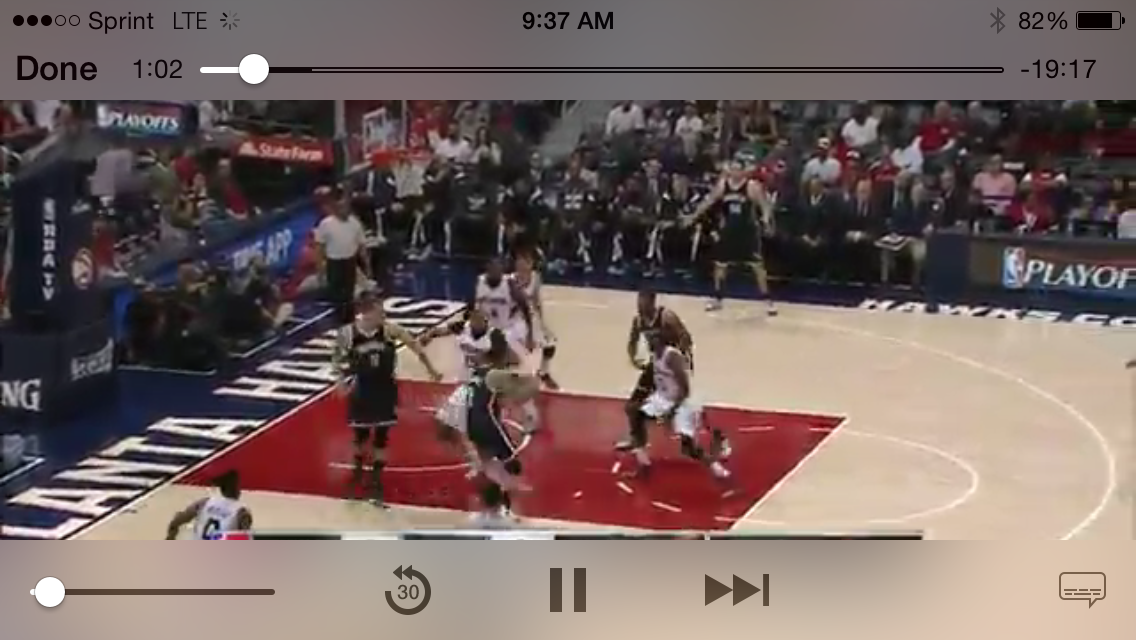
Take a look at this image to see what the dribble drive can do. 


Teague is in the lane here as a result of a dribble drive. The Nets defense which started the possession prepared, is now scrambling. All 5 Nets are in and around the paint. Teague hit a layup here but if he was forced to pass, Korver Millsap and Carroll were all open.  

This is something Deron has not done enough of since the Nets beat the Wizards at home to solidify its playoff standing.

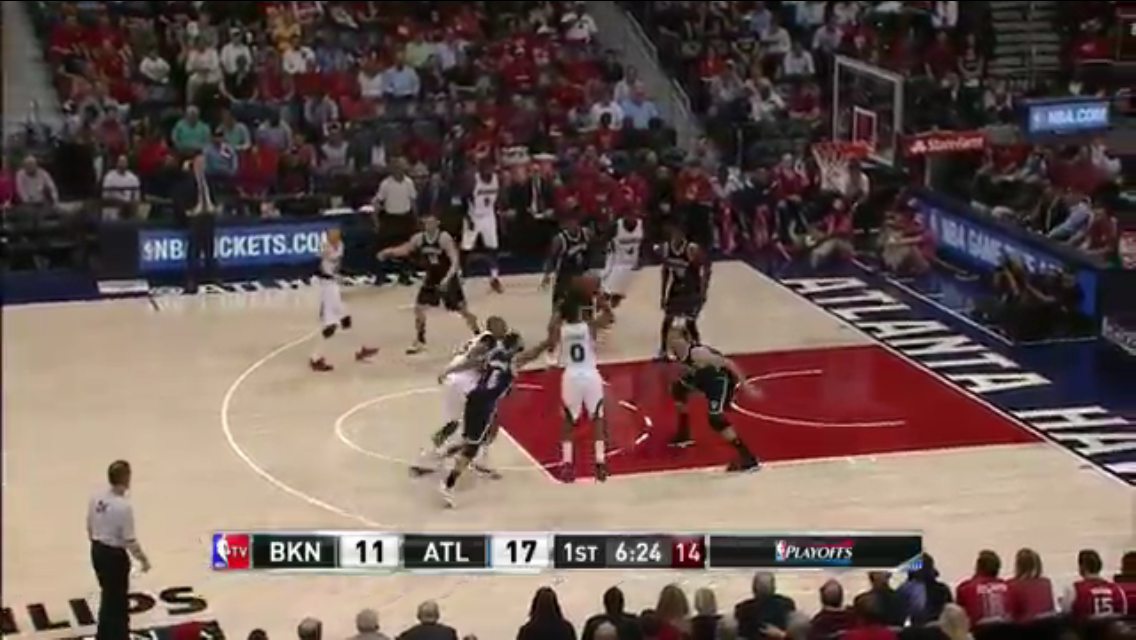
Take the picture below as an example of issues the Nets can cause if Deron has his head on straight.

  
Since he got to the middle of the lane, he has created an opening. 4 Hawks inside are guarding 3 Nets, and Bogdanovic and Joe are open from 3. Have them take these 3’s, instead of asking them to isolate and create for themselves, will help Brooklyn tremendously.
DERON WILLIAMS: DISAPPEARING JUMPER

If you are following the Rajon Rondo saga in Dallas you likely have noticed a common theme emerge. Point guards who cannot shoot are liabilities at worst, and hindrances at best.

Deron is shooing 33% in the playoffs thus far and that simply will not get the job done for the Nets. Deron’s percentage on pull-up jumpers? 0%. Zero percent!

It is true that the goal on an offensive possession should be to produce a dunk, layup, free throws, or a corner three. The midrange, and guards pulling up, is not optimal, and should not be the goal when running a set.

However, the ability to stick a midrange jumper still is valuable. First, if the offense is trying to get a better shot than a midrange jumper, what do you think the defense is doing? They are trying to force you to take a midrange jumper. The Hawks are a top 7 defense, and will succeed at that at least on occasion. That makes the ability to hit midrange jumpers that defenses are trying to force extremely valuable. Hitting them is how Portland beat Houston last playoffs: Houston kept forcing Portland to take and make midrange jumpers and Portland did it.

So, should the Nets try to shoot midrange jumpers? Definitely not. But the ability to hit them, when necessary, has value. Take a look at this Atlanta set: 


Brooklyn does a good job here of defending Teague in the pick and roll. Deron recovered well on Teague’s backside. Shooters were covered. Brook dropped back to contain a dribble drive. Teague scored anyway because he hit this midrange jumper. 

Hitting the midrange jumper forces teams to respect your shooting ability, which opens other avenues. If Brook steps up to Teague to take it away he may get blown by; if a defender steps in another Hawk is open.

Deron not hitting his jumper is a problem. Atlanta has no reason to respect it, which hinders his ability to drive to the hoop, which prevents him from breaking the defense down in all the ways mentioned above. 

BROOKLYN HAS TO KNOCK DOWN SHOTS

Effort is all well and good and is a necessity to winning in the playoffs. However, imagine effort as the price of admission. You have to give top level effort to have a chance, but because every team is good and every team is playing with effort, your giving effort, while required, does not guarantee anything.

The six worst 3 point shooting teams in the playoffs this far? Milwaukee Brooklyn Toronto Boston Portland and Dallas. Their combined records? 0-16. 

According to NBA.com stats, the Nets are fifth in the playoffs at percentage of wide open shots taken in the playoffs (a defender within 6+ feet).  That is not a bad figure, but the Nets are shooting just 28% from 3 as a team, and that will not get the job done. In particular, Joe and Bogdanovic are under 28% from 3 and those numbers just will not cut it for Brooklyn.

Does Deron need to create more opportunities for the Nets as its lone playmaker off the bounce? Yes he does. But the players around him also need to knock down the looks. When the rubber hits the road, the Nets will not run the Hawks out of this series. They will need to prevail in close games, where a make or miss here or there makes all the difference in the world.