With trade rumors in the Brooklyn air, nearly every game seems to be a referendum on the Nets. Tonight’s 102-96 victory over the Denver Nuggets? It felt like a referendum, in many ways. Here are some of the takeaways.
Your comments!
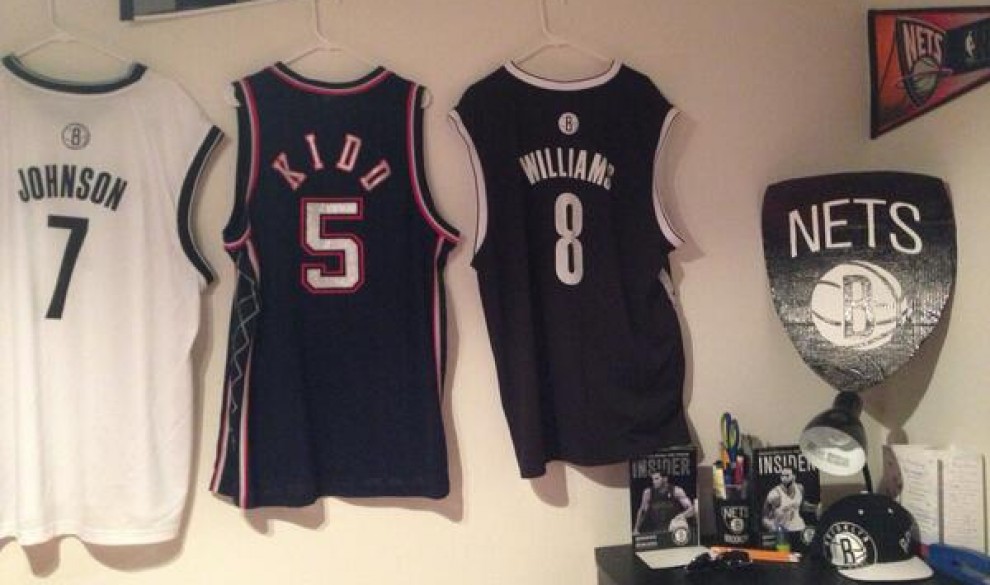
With trade rumors in the Brooklyn air, nearly every game seems to be a referendum on the Nets. Tonight’s 102-96 victory over the Denver Nuggets? It felt like a referendum, in many ways. Here are some of the takeaways.
It’s a natural tendency to view NBA players in binary terms. This player is better than that one. This player is a leader. That player is good. The player over there is not.
And after the Detroit Pistons waived Josh Smith (hat tip to Vincent Ellis of the Detroit Free Press for breaking the news: https://twitter.com/Vincent_Ellis56), Smith is being discussed in those binary terms.
Much of that is deserved: a post about Smith, because he is so flawed, must start with all the problems with Smith. He shoots under 30% from 3, and displays a general refusal to focus his offensive game on the blocks, instead jacking shots beyond the foul line and arc with relative reckless abandon. In a game built around the 3, he’s something of a throwback to an era of less productive offenses. He’s at least somewhat of a malcontent. Believe he will be saved by Lionel Hollins? That did not work under Stan Van Gundy. And as Brooklyn has seen with Andrei Kirilenko and Gerald Wallace (and the league has seen with Lamar Odom), there is precedent for the toolsy, multifaceted talents whom don’t rely on their jumpers to be effective cratering as they age, as once that athleticism and activity level begins to wane, the uniquety of their games dissipate, there’s no shooting prowess to sustain them, and … you know the rest.
Still, I think the Nets should take a chance on Smith. Everything in the NBA is dependent on its facts, right? Did Kobe Bryant evolve from winner into loser, or did his teammates change? Rudy Gay did not fit in Toronto with Lowry, DeRozan, and Ross needing the basketball — he has thrived on a Sacramento team that NEEDS a wing who can make plays with the basketball. Deron Williams is overpaid and seen as an albatross. Hypothetically, if he was owed $3 million through 2017 instead of $63 million, the viewpoint would change, right?
The facts as would be true if the Nets sign Smith eliminate many of the concerns and issues with Smith, and make it a risk worth taking.
The 4 year, $56 million salary Smith had in Detroit was absolutely outrageous. It ate up $14 million in the coveted summer of 2016. Smith was underperforming, markedly so. The deal paid him like a near max player, which is overly generous for a player who cannot shoot, and who likely must be surrounded by shooters to be effective.
As a Net: Smith would not be overpaid. The concern that Smith saddles you with a bad contract is not existent. Sure, Smith at $14 million per, over 4, is a huge issue. Smith on a 1 year deal: essentially a 5 month deal given the timeline? Suddenly, a lot of that risk is not present. If Smith wants 2 years, or a year 2 partial guarantee? Kick him to the curb. But on a 1 year, $1-2 million deal, the Nets are essentially signing Smith to a 15th’s man salary, in the hopes he has an impact. If he is atrocious, cut him on the spot. Is that flier not worth cutting Brandon Davies?
And that’s the thing. While Smith is no Joe Johnson, Johnson serves as local proof that it is a mistake to allow a contract to define a player’s skill level. Such has happened with Smith. 4 years and $56 million ties a franchise down, 1 year and $1-2 million? That’s just pebbles invested in him, on the chance he is able to provide some value.
Over a six season stretch in Atlanta (5 with Johns0n) prior to signing in Detroit, Smith shot between 45.7 and 49.2 % from the floor. Can he get back to being that type of player? A player who is able to make players better with his playmaking, while mixing it up inside with some postups, duck ins, and forays to the rim?
Which leads to another point. Smith was totally miscast in Detroit. In Atlanta, Smith primarily played the 4. He could beat larger 4’s off the dribble, which opened up his post and inside game, and his playmaking for teammates. Often from 2008-2013, the Hawks had nominal point guards, and relied on Smith’s playmaking for the offense to hum. However, as a lumbering 3 in Detroit, suddenly he could not beat defenders off the dribble, and to compound things, Greg Monroe has taken his paint real estate. The Nets can eliminate that concern by playing Smith at the 3.
Given the issues that arose in Detroit, there are some concerns that Smith may “rock the boat,” in Brooklyn and compromise team chemistry. That’s a very valid concern for the Nets … were they 20-6 through 26 games. They’re 11-15: is there a boat to rock? It’s one thing to worry about an addition affecting the chemistry when everything is going well, in the worry an injected personality has a bad affect. That worry is not present here. Also, it cannot be understated that restricted free agents out of the draft are playing for their first big contract, and such created tension between Monroe and Smith, given their shared position and shared place of real estate. While Mirza Teletovic is playing for a summer deal, there are distinct differences in that Teletovic occupies a different space of the floor than Monroe and Smith, and (while less convincing) Teletovic’s development is likely less important to Brooklyn than Monroe’s to Detroit.
The chemistry concerns in Detroit: not really in play in Brooklyn.
Finally, it is hard to see the Nets getting a better player than Smith in a free agency signing: at this stage, guys are not on NBA teams for a reason. The Nets just signed Darius Morris to a contract to fill their roster: there’s a better player out there, on paper, than Smith?
Again, perhaps Smith is permanently a shell of himself. And, i no way shape or form should the Nets extend a commitment to Smith beyond 2014-2015: if that means someone else gets him, so be it.
If the Nets can get a former foundational piece for a perennial playoff team on a minimum salary, solely under contract for this season, they should do it. So many of the problems with Smith would not be in play, and the risks minimized, mitigated, and managed.
He’s overpaid? Not on a minimum salary over a season. He’s miscast as a 3? Not if the Nets play him at the 4. He’s a chemistry problem? The Nets are desperate for a talent infusion and have no delicate boat to rock. He’s cratered? The Nets would essentially be risking nothing but passing on Brandon Davies’ development (if he is the odd man out) and taking a one year chance on Smith. Again: if Smith wants any money in 2015-2016, he should be told “find another taker.”
Best case scenario, the Nets sign Smith, he has a resurgence, and becomes a key rotation piece in Brooklyn. Worst case, he becomes immediately despised in the locker room, causes problems, and the Nets, having just committed a single season to him, kick him to the curb and move on, The losses incurred: a bit of Prokhorov’s cash (why should you care?); Davies’ development (is he really in the Nets longterm plans); and the Nets looking lost on the floor (isn’t that already true?)
Smith probably will not be a Net. Other teams appear interested while Brooklyn does not (and have more to offer contention wise). And another team may give him a 2 year deal — something I also maintain the Nets absolutely should not think of doing.
However, what the Nets should do, is try. 1 year, $1-2 million dollars, no guaranteed money once July 1 hits.
Remember: context is everything. 4 years of $56 million of Josh Smith at the 3 is an albatross. 1 year and $1-2 million of Smith at his natural position for a team needing SOMETHING to give it a boost?
It’s a reasonable gamble the Nets should try to take.
pf more inside plus slower bigs
Posted in Rumor Central
There’s a principle of life that, when it comes to the NBA, seems tough for many to understand: it can always be worse. Such would be useful for the Nets to remember, with rumors of a deal to the Kings for Darren Collison, Jason Thompson, and Derrick Williams having surfaced (Hat tip to Adrian Wojnarowski for reporting the rumored terms: http://sports.yahoo.com/news/sources–kings-discussing-trade-for-deron-williams-222855172.html)
To quickly brush them aside, Thompson and Williams are worthless floatsam, really bad contracts that have no value that the Kings likely cannot wait to shed. They will fetch extremely little in return if the Nets look to flip them. While less valuable at his age, the return is reminiscent of the Kings acquiring Terry and Evans from the Nets for Thornton, on the rationale that the smaller pieces wore more easily flippable. The result? They turned Terry AND two second round picks into Alonzo Gee (http://espn.go.com/nba/story/_/id/11543761/houston-rockets-acquire-jason-terry-sacramento-kings).
So, really, this deal comes down to a look at Deron, and Darren Collison.
Two things. First, it can always be worse. Second, it’s always nicer on somebody else’s plate. Collison has bounced around the league, a high character guy who teams like on arrival, then sour on when they see that he’s not all that good. He is not much of a facilitator, and his signing with the Kings was near universally denounced. Yes, he has fit with the Kings, but even in a clear career year — where he’s had the benefit of blending in around the talents of Cousins and Gay — he’s been essentially a 15 and 6 guy on 30% shooting from 3.
Strip away the contracts, the failed expectations, the aggravation and grey hair, and just look at Deron and Collison as two basketball players on a basketball court since the beginning of last season (provides both a large sample, and a look at Deron at his lowest point). and Deron is the better piece. He is a better passer tasked with more responsibility, and also a better shooter from distance.
More importantly, considering that Deron, largely at the lowest point of his career, is better than Collison at his apex — an apex of which we are unsure of sustainability — and this appears to be a low reward transaction for the Nets, at its best.
Remember, it can always be worse. And just because Deron has been (not always, but at times), a disappointment, a malcontent, an attitude issue, a guy who talks about not being a true New Yorker, a guy who demanded deals then did not perform to justify that, and so many other negatives, DOES NOT mean that the Nets should deal him in a trade that hurts the roster, just to exclaim “yes, he’s gone”! That sugar rush will wear off quickly if the deal is not a smart one.
On this note, any case to me made for this trade clearly does not stem from this year’s product. The trade absolutely hurts the Nets on the court. So, let’s look forward.
The Summer of 2015
The 2015 cap is projected at $66.5 million, the tax threshold $81 million. I sure do not care about the Nets’ tax bill, and will never justify any course of action on “this hurts the present and future produce, but the team saves money”: that money does not get distributed among the fanbase and goes in the pocket of someone with way more money than any of us. The implications of the tax, however: no team at the apron (i.e.: $85 million in 2015) can execute a sign and trade.
The Nets at this moment? They’re at $76, 786,017 in player salary for next season if Brook Lopez opts in. Add $845,059 to that if the Nets exercise their team option on Cory Jefferson, and add that again if they do the same on Markel Brown. That would put them at $78,476,135 (and would be the cheapest course of action the Nets could take). The Nets would have 11 players by drafting in the first round, with what will likely be the Hawks pick. Currently that pick is at 26, for a salary of $991,600 and $1,036,600 in 2016. (http://basketball.realgm.com/nba/info/rookie_scale/2016), putting the Nets at $79,467,735 for 11 players.
The Nets would then be at 11 players with the following free agents: Teletovic, Garnett, Jordan, Davies, and Morris. Again assuming the cheapest of cheapest options (remember, the idea out there is flexibility), assume Garnett retires (plausible), the Nets fill 3 of the 4 remaining spots with bare bones minimum salaries of $529,093 (http://www.cbafaq.com/salarycap.htm), and the Nets resign Teletovic so that they can compete, at $7 million per, a very reasonable number. That takes the Nets to $88,055,014 next year — and that is also an extremely conservative projection on the low side. The number rises if the Nets sign any free agent beyond the rookie minimum, if Mirza makes closer to 8-10 per, or if the Hawks are not the 5th best team in the league as they are at this moment.
If the Nets do this deal, the payroll in 2015-2016 is $9,597,991 lower than it is at press time. That puts them at, in these projections, at $67,188,026 heading into the offseason: that puts them a smidge over the cap heading into next offseason. At this moment, the Nets’ sole options next summer are the following:
-the ability to resign Mirza — an ability a Deron deal does not alter
-the ability to sign a free agent using the mini midlevel exception (as use of the midlevel requires you stay under the apron, which the Nets pass even under these conservative projections) — that ability does not change with a Deron deal
-a lack of ability to execute sign and trades — that ability is also nonexistent with a Deron deal, as the Nets would still need to pare salary to do that. In regards to paring salary, who would they pare?
Translation: the short of it, for 2015 purposes, is that a Deron deal does little to alter the 2016 picture. The Nets will head into next summer with little flexibility to upgrade the roster, and a Deron deal will make little difference, outside of getting the Nets closer to the sign and trade threshold. However, teams trying to save money are unlikely to perform a sign and trade, especially when the Nets are hoarding cap space for 2016.
THE SUMMER OF 2016
This is where a deal could have a dent, but that dent has been overstated. Here is the current picture headed into 2016.
1: The Cap (the tax is typically $12-15 million above the cap per a complex formula): in the most bold of projections, the cap could hit $91.2 million (http://www.cbssports.com/nba/writer/ken-berger/24740037/nba-enters-new-stratosphere-with-tv-deal-but-how-will-pie-be-split). In the most conservative of projections, the cap would be at $70 million, pursuant to a slight raise from 2015 akin to the raise over 2014-2015.
2: The Salaries on the Books, requiring a few assumptions. Let’s be conservative:
-Deron: $22,331,135 after opting in (he’s not insane)
-Teletovic: $10 million (in this variation, I am minimizing the Nets space and assuming they gave Mirza a premium to stay).
-Karasev: $2,463,753 after exercising his option.
-Plumlee: $2,328,530 after exercising his option.
-Brown: $1,180,431 after exercising his option.
-Hawks 2015 first rounder: $1,433,800 (assuming Hawks fall to the 18 pick in 2015, in being super conservative).
-Two Purchased Second Rounders: $1,068,564
This puts the Nets at $40,806,213 — with approximately $29,193,787 in cap space — an absolute ton. Remember, that number can EASILY be significantly higher. The Nets can decline Brown’s option, and reneg on extending second round picks into their 2016 space, easily pushing into the 30’s. They may decline Karasev’s option if his development is stilted by 2016. They may sign Teletovic to a smaller deal than an 8 figure sum. Couple that with projections over $90 million, and the Nets can have as much as $55 million in cap space, with Deron on the roster.
The conclusion: this team has PLENTY of flexibility on the free agent market in 2016, with Deron in the fold, as at least SOMETHING to show free agents. Yes, these figures do not account for Lopez or Johnson, but it is unclear how much that matters to Brooklyn.
The cap space figure without Deron: Add $10, 276,681 to the figure. But here’s the problem. In the worst case scenario for Nets space, they go from A LOT of space to “A LOT A LOT.” In the best case scenario, with the new TV deal? They go from “ridiculous cash on hand to remake the roster in its entirety” space to “who needs all these space because this is so much space” space.
This is NOT a situation where the Nets lack flexibility, and this deal provides it. Rather, this deal changes nothing for the Nets assets options and flexibility picture until July 2016, at which time it just enlargens an already large trove of cap space.
And there’s the rub. Does that extra cap space really matter? Look at the roster the Nets will be selling to free agents: it’s BEST non Deron piece is CLEARLY Mirza. There is NOTHING on hand to sell free agents besides Brooklyn, Barclays Center, and a chance to essentially build a roster with a blank canvas. Which, for all the New York City swagger about that being smart, is not a great plan, historically.
The Knicks and Nets tried that in 2010 and wound up with ancient knees on one end of the river and a motley crew on the other: free agents want to play with other talent, not come to something uncertain.
The Mavericks tried that for years (http://www.hoopscritic.com/story-of-the-rondo-trade-the-great-mark-cuban/), before Mark Cuban made the decision: having SOME quality on the roster that garners player respect around the league, even if that talent is flawed (read: highly flawed Deron), BEATS having an island, and a bit more cap space. Cap space is worthless if guys have no desire to sign into it. It is valuable IF you can attract talent to the roster using it, and what you can present based on what is already in house.
What is in house may be flawed, but it better be talented, which Deron is: he is a better player than what the Kings are offering the Nets, and his name cache may be HELPFUL (if not a clincher: there are never gurantees in free agency) in actually attracting talent to the roster. Players do not need to look at the roster and see 50 wins, but DO need to see something where they can say “I can improve the core of this, I can be the missing piece.” Are guys smart if they use Deron to draw those conclusions? Honestly, probably not, but in a league where Dwight Howard listed Stephen Jackson as a top 5 teammate, and LeBron James list of moves forced in Cleveland and Miami reads like a “Billy King on a bad day” epitaph, and Chris Paul was angry at the New Orleans Hornets for letting Jannero Pargo go, (etc: this can go all day), this is a league where you can sell players on talent given its name or its pedigree. Deron at least offers the Nets some semblance of a sales pitch to free agents, that Collison does not. And at the end of the day, I would rather pitch “we have alot of cap space, the outlines of a roster, and a nice city and building” than “we have a lot a lot of cap space and a nice city and bulding.”
The concern in this corner: in making this deal, the Nets will pitch it as financial flexibility, but given the enormous tax savings they would be looking at, and unlikelihood that those savings are actually successfully reinvested in 2016, are they simply thinking “we won’t win these next 2 years and probably won’t score in 2016, let’s just save money”?
CONCLUSION
As with much around Brooklyn lately, it’s possibly easy to read this and think “wow, the Nets are truly stuck.” The reality is that they are. If they try to win now, they have a low ceiling. Try to rebuild, and there’s simply no way to replace the lottery picks traded out. Try to trade the big 3, and there’s nearly no way to deal without dealing at a loss — and as bad as things are, dealing at a loss only makes things worse.
The Nets ONLY hope is a 2016 roster remake. From a “let’s win” perspective, all eggs should be placed in that basket, without dipping into future assets. The proposed Deron deal may not dip into the future, but it does not help fill that basket, and chiefly operates to save money for an oligarch.
Posted in Analytics
The moment that has Nets fans abuzz after last night’s loss at the hands of the Cavaliers is simple: down 94-91, the Nets did not call a time out to set up a play for a potential game tying 3. After an incredibly messy possession, the shot the Nets got was a Kevin Garnett 3 that had little chance of going in. While I love advanced stats and bigs moving behind the arc is progressive, KG has made 9 threes since being traded TO Boston (and none as a Net) on 60 attempts (6 as a Net), so let’s nip “that’s a good shot for him” in the bud before explaining what went wrong, and why it went wrong.
First: Choosing not to Call a Time Out, In the Abstract, is Fine: the Problem is Players Don’t Live in the Abstract so they Need to be in on the Strategy
This a classic “advanced stats vs traditionalists” debate. It is common for basketball traditionalists to believe that late in a game, you need to call a time out to set up a play, and settle down the troops. Coaches tend to gravitate towards doing as such to control the game.
However, in recent years, it has been common for coaches to choose to keep the pace frenetic, and push the ball as opposed to calling a time out late. And this tactic, believe it or not, has seen much success, in comparison to drawing up a play. For all the talk of setting up the offense, a timeout gives the defense a chance to set up. Not calling a time out can cause the defense to be off guard. In the NBA, it is difficult to score against a set defense: the chances of scoring on an unprepared defense are notably greater.
So, in the abstract, the more advanced stats based decision not to call a time out, is a good one.
However, note the bold. As with any advanced stats measure, what must be combated is that players in the NBA do not see the game through that lens. It is common, at all levels of basketball (especially younger ones) for coaches to call a time out in a late game situation. Players are used to the time out call. Such was the problem late for the Nets.
For all the valid discussion of “not calling a time out helps cause the defense not to be set,” the surprise tactic does not work if the offense is also surprised! When players are coming down the court for a score without a plan, not knowing if timeout is going to be called, kind of expecting it to be called because that’s what’s typical for them, you get a haphazard, mess of a possession. That is what happened to the Nets late. The “catch them off guard” tactic is a good one . . . if it’s a TACTIC. When you also do not know that that is the plan, you also catch yourself off guard.
The plan not to call time is fine. But it did not work because the players did not know it was coming. Lionel Hollins should have told the guys “get it and go, we’re not calling time out.” It is unclear if he indeed told them that.
Second: Yes, the Nets have had their share of late game failures. But the problem is the overall low level of offensive production, not individual examples of the problems late in games
As an aside, whenever fans comment on a relatively close game, the most common topic, inevitably, is the fourth quarter. You remember what you just saw. And the perception of the NBA is that the only quarter that matters is the fourth.
That could not be more untrue. An NBA game is 48 minutes long, and each minute matters equally. In the normal game, a team gets ahead after the first, second, or third quarter, and that team wins because the other is playing catch up. Look at how many blowout losses the Nets have: those games are over come the fourth. And in most of their fourth quarter “struggles,” these are not situations where the Nets are blowing leads, but situations where the Nets are behind, and make mistakes trying to dig out of holes. Getting IN the hole, repeatedly, is the problem.
The Nets offense ranks 24th on the season, 29th since mid November. This is a team that cannot score points. And is in very bad shape, in more ways than one. The poor fourth quarter play is emblematic of poor play throughout the game: this is not a team that plays well all game and then struggles late.
Such is life for a 10-15 team with less tradeable assets than, quite possibly, any team in professional sports.
Posted in Analytics
The 2014-2015 season for the Brooklyn Nets has been nothing short of sobering. A losing record through 22 games. 1-11 against teams over .500, the lone win in overtime against a tired San Antonio Spurs team. And while none may be fully healthy, this has come, largely, with Deron Williams, Joe Johnson, and Brook Lopez on the court. Add in rumors of a “firesale,” (or, at least, loud shoppping of one or two of the three), and rumors that Mikhail Prokhorov may want to sell the team (which, while the Nets have not confirmed this, the circumstantial evidence of the Nets cutting salary and Prokhorov’s history of buying low and selling high on his holdings at least hints at) and you have a nightmare of a season at the quarter pole.
It is true that not all has gone wrong. As bad as things are going, the east is terrible. The Nets are in the 8 spot at this moment, and could vault to 6 by late tomorrow night. They are adjusting to a new coaching regime, and did pick their play up the past 2 years when the new year came — is a third year in store?
Still, this clearly was not the vision coming into the season. What has gone wrong? More importantly, can the Nets fix it?
Deron Williams’ Resurgence is Real, but Overdramatized
The old lightning rod. One thing about Deron cannot be argued. Say something good about him, and you will have a trail of his naysayers, after you. Say something bad? Those who believe in him, fully, will be as aggressive. The reason? The truth is somewhere in the middle.
Deron has been a better player than he was last year, or in the first half of 2012-2013. However, Deron has NOT been the player he was to close 2012-2013, or the player he was in New Jersey. And for all the spilled ink on failed Jason Kidd power plays, and Prokhorov’s sights on combinations with the Dodgers or an extrication from the NBA, and Billy King and his having traded a near roster full of NBA draft picks, this is the true issue in Net land.
The bottom line is the Nets, since 2010, made everything about dealing for a star, and surrounding him with talent to win in the present. That flagship player was Deron. Not Joe Johnson, Brook Lopez or Paul Pierce (that’s not why they brought HIM here), but Deron.
Is Deron better than last year? Yes! Is he THAT? No! And that’s the problem.
Sadly, and concerningly, there were signs of Deron getting back to that early in the season: and with all his maladies, expecting a rapid spike was unreasonable. But Deron has not built on that resurgence, having generally played worse, or at best neutrally to the early portion of the year, as the season progressed.
In today’s game, it is critical for a lead guard to be able to get to the rim. Gone are the days of Shaq, Hakeem, prime Duncan, and giants bullying through defenses. The new NBA is built on the dribble drive and three pointer. Want open threes? You won’t get them by just passing the ball around the perimeter as the defense watches. You have to get into the teeth of the defense. Force doubleteams. Force mistakes in rotations. That’s how you turn contested threes into open ones. That’s not something Brooklyn gets enough of. Don’t you think a team with ALL this three point shooting on paper (Deron, Joe, Mirza, Bojan, etc) should rank above 19th in 3 point %.
It would, if they took good threes. But the Nets don’t get into the teeth of the defense, to force unpressured, good looks. Far too often their lead playmaker, Deron, possums around with the ball, and passes to a complementary player, puttting him in a position to create, as opposed to facilitating, and creating the easy look.
The proof is in the pudding. For Deron, a good breakdown point is the first 8 games and the last 14. Through 8 games, the Nets looked sharp. A nice 4-2 start, and two losses in Phoenix and Golden State that, despite the blown lead in Phoenix, had many positives. Since, the team is a wreck offensively.
Deron is shooting just 43% from inside 10 feet since that point in the year (http://stats.nba.com/player/#!/101114/tracking/shots/). That is down from 49% in the first 8. A Deron finishing inside 10 feet: that’s a Deron getting into the lane and making things happen. A near elite player (he was not elite, but he was positively trending).
The result? The defense has to respect his dribble drive. Defenders commit. Deron is unselfish, so the ball whips around. Guys like Teletovic, Bogdanovic, and even Johnson are the recipients, and get nice, clean looks at the basket.
Deron shooting 43% from inside the lane, with his attempts down? (http://stats.nba.com/player/#!/101114/tracking/shots/?DateFrom=11%2F14%2F2014&DateTo=12%2F15%2F2014 – Deron is shooting 33% of his shots inside 10 feet since the Warriors game; he was near 38%). Now, the defense is not being broken down. Teletovic and Bogdanovic are not open, or attacking frantic closeouts. Rather, they are going up against set defenders. Suddenly, Deron’s effectiveness wanes, even just a little, and theirs does. Guys lose confidence. Start submarining the offense going 1 on 1. Sound familiar?
The other place this effect is extremely noticeable: Deron’s hockey assists are way down from the start of the season. Sure, the NBA does not credit secondary assists (or hockey assists: making the pass that leads to the pass) in the traditional box score, but the stat is valuable. It tells you when a player is drawing the defense, and causing it to collapse: often that player passes it out, and the defense is able to rotate once — but not twice — the next pass is the killer.
Through 8 games, Deron averaged 3.1 hockey assists per game, per Devin Kharpertian of the Brooklyn Game (https://twitter.com/uuords: Scroll to his tweet of 11/13). Right now? He is averaging just 1.8 on the season, with just 18 hockey assists since that point–just a touch over one per game. The difference is stark in the Nets offense. When Deron was getting into the lane more effectively, defenses collapsed. He willingly passed. It often led to open shots, either off his pass or the next. Those secondary assist opportunities are not coming, because he is not breaking defenses down with the same vigor.
Maybe it’s the ankles and he gets it back. Maybe it’s the way the roster fits. Maybe it’s a permanent loss of explosion. But the further New Jersey Deron seeps into the rearview mirror, the less likely he comes back.
Why is the decreased shot creation a problem? For starters, it’s necessary for the offense to function. Joe Johnson, struggling early in the year, really is what he is. Ride him, and he’ll sometimes get hot, sometimes shoot you out of games. He is so much better when he is the focal point in the post, or when he is the beneficiary of Deron penetration, because he is a knockdown shooter when he has space. When Deron does not create, he has to. When he has to create, things work really well when it happens out of the post, and generally go poorly otherwise. That shot creation from the post, of course, is largely absent when Brook Lopez is on the court: you can’t build two beautiful houses on the same parcel of land. (More on that later).
Brook Lopez, for that matter, is struggling too. As with Deron he is struggling to finish inside compared to his all star year in Brooklyn (http://stats.nba.com/player/#!/201572/stats/shooting/?Season=2012-13 ). Such is the nature of a foot injury. You lose explosion, and that makes it harder to elevate and thus, be in proper position to finish. You are ginger with your moves, as opposed to confident and smooth. You watch where you plant, and think instead of react.
Put the struggles together, and ironically, this is a Nets team that is struggling to score, not struggling to defend. The Nets rank 11th in the league on defense, 23rd on offense (http://stats.nba.com/league/team/#!/advanced/?sort=DEF_RATING&dir=-1). That is a team defending well enough to win–a team playing hard for its coach–but a team struggling to put the ball in the hoop. Through 8 games the team ranked 5th offensively, and 20th defensively. Ironically, the defense is top 10 in the league since the strong start to the year–the Nets are actually defending better than when they were 4-2. The offense? 27th since the Portland road game. Bottom 4.
As an aside, some have said the cap space plan is not a good one. And normally, it isn’t. But here is the thing? What can the Nets do that is better? Launch a rebuild without lottery picks? Rely on the trade market when they are one of the lowest asset pool teams in the league, and even if they deal much of their core for assets, STILL would be asset because the player value is low?
The best option they have is to hope to sell free agents on Brooklyn, the building, and the roster generally in place. That’s not a great plan, but at least it has a chance — a chance, even a low one, beats a prayer—rebuilding through picks in the 20s or trying to deal for stars without assets is a prayer.
In that regard, the Nets best chance at scoring on the market is winning games in the present. The more they win, the more likely free agents are to see the program as something to join in the beliefs they can be the missing ingredient. That is the Nets best future play: win as much as possible to sell new talent on the place.
A good plan? Maybe not. But when you deal all these picks and kids for a roster that lacks an elite player, there are no good plans. Only less bad ones.
Maybe it all sounds like doomsday. And it’s easy to read this and think, “man, all of the options suck.” And that’s the problem: they all, in a way, do. When you have no flexibility, and you’re backed into a corner, there is not much you can do to get out without making it worse.
Posted in Analytics


 Brooklyn's Beat