Monthly Archives: January 2016

Nets Free Agency Options: Hawks and Wizards Edition

The Atlanta Haws are one of the best teams in the east. They have some cap flexibility, although not as much as it appears at first blush with Al Horford as a free agent, and likely wish to to continue building as a contender. The Wizards have been a disappointment, but have a tremendous amount of cap space, and figure to continue trying to compete in the east.

So with free agency approaching, who on the Hawks and Wizards may interest the Nets, and who can they get?

Al Horford: Horford is an unrestricted free agent who should see huge league wide interest. I always have seen him as underrated by fans (the many great things he does aren’t reflected in traditional stats), but overrated by many media (for overcompensating for how underrated he is by fans, using words like “superstar”).  Still, Horford is very, very good. He does have some weaknesses, however. He is undersized, can get bullied by bigger 5’s (Brook Lopez has dominated him in multiple meetings and forced the Hawks to revamp their playoff defense), and forced the Hawks to bring in Tiago Splitter this offseason — it is at least a minor issue if your elite center requires that good of a player behind him.  The Nets could decide they prefer Horford to Brook or Young, try to sign him, and then flip one of their bigs. There is no reason, given the Nets have the cash to sign Horford outright right now, to deal either big before signing Horford — they can grab him and then flip one of their bigs, rather than risk dealing them just to see him not sign.  Of course, Horford seems happy in Atlanta, who can reward him financially in a way other suitors cannot given the new CBA rules.

Bradley Beal: It’s become trendy and popular to propose the Nets offering Beal a huge max contract as a restricted free agent, but there are multiple issues with the approach. First, Beal is the clear 2 to Wall’s 1 in Washington, and due to his popularity and the Wizards’s popularity and round 1 wins, he has become somewhat overrated. Beal is a good or perhaps very good player. He’s not a great player. Also, given the Wizards will have over $53 million in cap space, and will be huge players in free agency even if Beal returns on a max deal, there is no reason for the Wizards to balk. Is it worth tendering him an offer, and waiting 3 days for the Wizards to match, all the while being unable to use a dime of the money in the offer on other free agents as they slip off the board (as a restricted free agency offer ties that cap space in that player, until the offer is or is not matched)?

Kent Bazemore: Bazemore has been a strong replacement for Carroll this year, and the Nets absolutely need more productive wings. However, there are some issues involved with this pursuit.  The Hawks dealt Carroll in the hopes they could replace him at a lower cost, and Bazemore, unless he commands $15 million per, has done exactly that: if he resigns at $10 million per, that is a bullet Atlanta may bite. Still, he may command $12-$15 million per given the market for wings, and if he does, he is grabbable. Do the Nets want to pay that rather than find the next Kent Bazemore on the cheap?

Jared Dudley: Dudley is hitting an age where he is likely to put winning above a payday. However, despite not being a significant name to many, he is a very solid NBA wing, and very valuable player the Nets need to take a big look at. The Clippers and Bucks did extremely well with Dunleavy as a major piece. Both have suffered in his absence: the Clippers have missed Dunleavy on the wing (especially before bringing in Pierce), and the Bucks have been significantly worse this year, in large part due to losing Dudley’s services on the wing. He may be 85% of what Bazemore is at 50% of the price and the Nets need to seriously look at him.

Kris Humphries: Humphries as Nets fans know has weaknesses (he’s a mediocre offensive player who can hurt his team by crashing the boards even when it is suboptimal), but he has played well in Washington, and the Wizards have him shooting threes at a respectable 35% clip.  He can be a third or fourth big on a good team (he was as such on a 49-33 Nets team, and may be a better player now).  Perhaps he won’t return to a team that traded him, but he is a piece to look at. And with the Wizards likely seeking to retool around Wall and Beal this summer, their other free agents, like Humphries, may be very obtainable. The Wizards have a $4.6 million team option and Humphries is clearly worth that cash, but the Wizards could be in flux this summer.

Alan Anderson: Anderson as we all know is a nice role playing rotation wing.  He is a piece the Nets can look to bring back, despite his injuries this year. Anderson perhaps may seek a return to what he had in Brooklyn.

Nene: Nene has a big name, and fans surely remember the Nets passing on making him an offer in 2011. But times change, and Nene has aged in the past year or two in Washington. Believe it or not he’s getting just 18 minutes per game, and he’s just not the same player he once was. His mobility is limited, he struggles defensively, and his game is slipping. He is not a piece to look at this summer.

Mike Muscala: Muscala has not played big minutes this year, and has been something of a disappointment, shooting just 31% from 3. However, he is a young big who competes, has shot better in the past, and may have a real NBA future as a back end rotation player. Muscala is not a player to give a big payday, but he could become a legitimate player, and that is the type of thing the Nets should gamble on with their cap space, especially at a manageable price, as opposed to focusing on the big splash.  With Horford and Bazemore free, and a potential decision between Teague and Schroeder coming, the Hawks have more pressing matters than Muscala.

Ramon Sessions: Sessions has always been a competent backup point guard, and is essentially a fourth guard. He could draw interest but the Nets have enough of those and he is the definition of a “dime a dozen” player.

Gary Neal: Neal is a mediocre defender, but he is a rotation player because he can shoot the ball off the bench for a contender. He is not a priority in free agency, but a piece the Nets can look at.

Garrett Temple: Temple is a fringe reserve guard who has now been in Washington for some time. The Wizards also brought sessions in to help handle the duties. Temple is not the type of piece the Nets need going forward.

Drew Gooden: Gooden is on the downside of his career, is defenseless, and is now a bit player in Washington. I expect the Wizards to decline his $3.5 million team option but do not expect the Nets to be interested.

Mike Scott: Scott is largely a bit player in Atlanta. He is actually shooting the 3 better this year, but is a fringe rotation player at most.  He is a piece the Nets can look at to round their bench out, but not a piece to commit significantly too. Competition to obtain him will be manageable.

Lamar Patterson and Shelvin Mack, DeJuan Blair, and Jarell Eddie: Patterson, Mack, Blair, and Temple are bit players at the end of the Hawks and Wizards roster, and whether they stick in the league this summer is a legitimate question.


Nets Free Agency Options: Miami Heat Edition

With the Atlantic and Central divisions reviewed, it is time to take a look at free agents the Nets may be able to snag, from the Southeast division. We start that review with the Miami Heat, a good not great team with many free agents, and given the hope to leap to great, many interesting decisions:

Free Agents: 

Dwyane Wade: In staying with Miami on contract 3 in 2010, and then staying in 2014 when LeBron left, Wade has apparently decided to remain a Heat for life. Given the rules of this exercise (I am listing every free agent) Wade is listed here for posterity. He’d help the Nets, but there’s a 99.5% chance at least that he does not become a Net.

Hassan Whiteside: The Heat have a decision to make on Whiteside. Do they essentially eat most of their 2016 cap space by giving Whiteside $20-25 million per year (that is what he will command on this market), as well as paying Dwyane Wade?  Or do they go in another direction to add multiple helpful pieces.  Here’s the thing with Whiteside: players who make flashy plays blocking shots, or play on big name teams, tend to become overrated. The Heat’s defense is better when Whiteside sits than when he plays: is that worth $20-$25 million per season. Surely not, unless you deal Lopez for a player at another position, but I question whether that really makes the Nets better. And even then, the possibilities you deal Lopez to sign Whiteside and then don’t get him, or that you sign Whiteside first and lose leverage in a Lopez deal, are both very real.

Luol Deng: I like Deng because he is a sharp defender who can shoot the 3 and take a player off the bounce, but like Whiteside, he too is overrated. He’s played on good teams. And he is a genuine great person. Both conspire to make him overrated. Deng is having a down year, and, at 30, that’s at least a yellow flag.  Couple that with the fact that the Bulls over the years never seemed to miss a beat when he went down, and he failed to bring a strong presence to the Cleveland Cavaliers or add to the roster in any way when he signed in 2013-2014, and I question whether the Nets should have interest, especially when he will command $12-$15 million per year.

Tyler Johnson: Johnson has provided some nice reserve guard minutes for Miami and, as a 40% three point shooter with decent ball handling ability, could be a reserve the Nets can take a look at this summer. Given the amount of free agents in Miami, they can only retain so much, and Johnson could be a defection. Johnson is a restricted free agent so Miami can match any offers, but they have more pressing priorities — both on the roster and off.

Gerald Green: It did not work out for Green in Indiana.  It did not work out in Phoenix. He has been a fair reserve in Miami, but is not a good defender, and cannot shoot. Simply, he is overrated in Nets fan parts because he provided excitement during a lost time in 2012.

Amare Stoudemire: The fall of Amare is sad.  He simply has very little to offer a team at this point, and the Nets do not need his services.

Beno Udrih: Udrih has not done much in Miami since being acquired in the Mario Chalmers trade. The Nets have enough mediocre reserve guards on the roster.

Chris Anderson: The Birdman does not fly the way he once did.  He’s barely playing for Miami, and interest in him this summer will, and should, be scant.

Josh Richardson: Richardson is an athletic young wing. The Heat took him in the 2015 second round and have barely played him.  They have a small $980,000 team option to retain him but perhaps, with Pat Riley planning a bigger strike, he is allowed to walk.

Udonis Haslem: The same can be said for Haslem as Birdman. Miami’s culture emphasizes rewarding suboptimal interests at times, to prove that the team takes care of its players (and after they got LeBron as a free agent, can you blame them?), so Haslem may indeed resign with Miami despite clear needs on the roster, and clear reason not to make him a priority.

Jarnell Stokes: Two years into his career, he has done nothing. The Heat have an $875,000 team option but may not even exercise it.  A rookie who struggles is still seen as having value, and will get chances to develop. A second or third year player? The draft prognosis starts to matter less than the body of work.


Trades:

Jarrett Jack for Josh McRoberts and two second round picks: McRoberts has been terrible in Miami, despite coming to much fanfare in 2014.  The Heat have so many roster questions, with 11 free agents, and the hope that they can improve in free agency, even though their current players will absorb much of their cap space.  To open flexibility they can dump one of their four 2016-17 contracts: Bosh, Dragic, Winslow, and McRoberts comprise those deals, but only McRoberts is worth dealing.  Via this deal, the Nets would provide the Heat some flexibility to do bigger things. Jack won’t ever play for Miami if this deal occurs so they cannot give up too much, but the Nets should leverage a couple of second rounders, for renting cap space in 2017, and in 2018 if McRoberts exercises his player option.

Billy and Lionel Gone: Now What?

Sunday, January 10, 2016, will be remembered as a significant day in Brooklyn Nets history: the Nets fired Lionel Hollins, and reassigned Billy King (which is typically a euphemism for fired).

To touch on Billy and Lionel’s tenures, while you can argue reasons for which neither deserved to be fired, there are, at a minimum, things they both did that cast doubt on their abilities to be a part of a consistent contender in Brooklyn.

The history of both only need be touched on briefly. For his part, Billy indisputably made multiple win now moves that backfired, in epic fashion. And while Mikhail Prokhorov and Dmitry Razumov’s overarching plans gave Billy a bad hand, he still negotiated poorly, and played that hand poorly.

For Lionel’s part, the problem with him is not sitting on the bench during games, or becoming exasperated with the media, but two simple issues: offensive and defensive schemes. Lionel’s offense was stunningly unimaginative. In an era where teams are taking a ton of threes, and moving the ball as much as possible, the Nets are isolating and setting up long 2’s. And his pick and roll and other coverages have often been questionable, and the Nets have seen nary a bump on the defensive end of the court despite his reputation being that of a defensive minded coach.

Alas, the Nets’ problems start at the top of the organization.  Prokhorov’s commitment to spending money exists, but being an owner is about way more than a willingness to spend.  Prokhorov demanded that the Nets win in Brooklyn, immediately.  That led to trades — as it has for many franchises through the course of NBA history — that were suboptimal, from an asset perspective, at best.

Even worse, Prokhorov has, bluntly, put building the Brooklyn brand above building a basketball team under the strictures of the CBA. He admitted that the Boston trade was made for brand building, not basketball, purposes.  Think about that: teams have placed a high priority on the draft since the new CBA came to be in late 2011 because, in light of the brutal luxury tax, and difficulty of prying opposing free agents due to the ability to pay more to an incumbent, and the Nets, in that climate, traded three draft picks without basketball being the basis for the move.

When you look at the moves made after the Boston move — the Nets stopped spending, even though by dealing their draft considerations for win now pieces, their only hope of winning was to continue spending on said win now players to bridge the gap to 2016 when they could turn things over — that only amplifies what Prokhorov confirmed about the trade being brand based. The Nets, clearly, just were not thinking about basketball when they made that, or many other, moves, but about ticket and merchandise sales.

It gets worse.  Just last year, CEO Brett Yormark did an interview wherein he basically said that it is a priority for the Nets to time their success around Knicks’ failures in an effort to grab market share.  Once again, think about that.  The NBA has a CBA of several hundred pages, guiding every move you make.  Every team as a result has a particular circumstance they are in, and should make moves based on that particular circumstance. Yet, the Nets have prioritized making efforts to win when it looks like the Knicks may not.

But then again, how do you make moves based upon your asset and basketball situation, rather than your ticket sale and business situation, when your CEO in Yormark, a figure who runs the business side of the operation, interviews basically on a weekly basis regarding free agency plans, John Calipari, and how he wishes for the ship to turn around.

The Golden State Warriors have former player agent Bob Myers, an attorney who played college basketball, and former NBA great Jerry West, at the controls. The Brooklyn Nets have Brett Yormark asking the Nets to sync wins with Knick losses. Think about that a little.

Combine all this with the incessant need ownership has to make transactions for the purpose of making a splash or creating buzz rather than to build a basketball team, and you do not guarantee the Nets’ current plight, but you sew the seeds for the potential of this.  It is VERY DIFFICULT to build a consistent winner in the NBA, even if you do everything right. You need good luck and fortune. You need some of the unexpected to happen, as far as the development of some players goes.

But that difficulty is only magnified when you start making decisions with the wrong factors and reasons in mind.  Success comes at the perfect intersection of luck, planning, and preparation, and while the Nets may not be at fault for their sufferings with that first factor, they have woefully failed with the second and third.  So many Nets decisions have not come from a place of “what is best for us in building a winner.” Rather, decisions, good or bad, have come from other places.  Let’s trade for Gerald Wallace and fire our athletic trainer to make Deron Williams happy. Let’s trade three picks to Boston to make a splash and generate buzz.  Let’s hire Jason Kidd because of what he did as a Nets player. Let’s hire Hollins, for that matter, because Kidd embarrassed us, so we need to hire a big name to rebound.

Such moves have led to criticism regarding the direction of the team. One minute Lionel is the face. The next he’s on the outs. One minute Billy is hiring his people to fill the front office, and the next the Nets are scouring GM candidates on the down low. Brook Lopez is shopped at the deadline, and then he is, if not THE piece to build around, a significant one. It all begs the question of whether there is a plan, even generally.

So, sure, Billy and Lionel do not have jobs anymore. They did not succeed, despite any mitigating circumstances, and that failure is on them. And sure, there are better candidates out there, which justifies some excitement.

But unless Prokhorov (and Razumov) change their ownership styles, and show that they have learned from the failures they have experienced in their first 5.5 years of ownership, as the saying goes, history repeats itself.

The Nets are not hopeless by virtue of their franchise name.  All 120 or so professional franchises, in the four major sports, can build consistent winners, if they find the right mix of luck, planning, and preparation.  Just right now, the Warriors, Cavaliers Clippers, all historical laughingstocks, are elite (or in the Clippers case, at least near elite) teams, while historically dominant franchises like the Lakers and Celtics are not close to that level.

Still, history does repeat itself.  And unless Prokhorov shows sincere changes in his ownership style, it will repeat in Brooklyn, and Nets fans will be as angry with Billy and Lionel’s replacements as they are right now with Billy and Lionel.

With that, here’s a sift through some options the Nets have, and some do’s and dont’s as they contemplate their next step.

Don’t: Hire a Big Name, or “Experienced Coach,” to generate buzz, “relevance,” or “credibility”

If the Nets hire a big name who is currently unemployed, just to have a fancy pressure and put themselves back in the paper, it will show that they intend to act just as they have the last 5.5 years. The whole reason the Nets are in this mess is because of their sugar rush philosophy: make a hire or sign a player in a manner that makes a splash, gets the media talking, generates a few website hits, and maybe generates some ticket and merchandise sales.  Then, when those hires do not work, where are they?

There is absolutely no reason for a single Nets move to be made with marketing or sales interests in mind. What the Nets seem to fail to realize is that these short term measures they seek, only have short term impact. But then, they have long term fall out. As the saying goes, if it were easy, everyone would do it. The Nets need to accept that becoming “relevant,” and generating a consistent fan appreciation and following, is not easy, and requires them to consistently win, year in and year out. Sugar rush related moves do not accomplish that.

Do: Hire The Antithesis of Lionel Hollins, and disregard experience as a factor in selecting a coach

There are issues with Lionel as a head coach, which issues were exposed in his Nets’ tenure.  His offensive philosophy was dated, exhibiting a lack of focus on the three ball, advanced metrics and statistics as they relate to lineup combinations, and an understanding that, in the modern game, a big is way more effective in the pick and roll and off the move than in isolation style post ups.  They also understand that the league’s greatest weapon after a paint shot, is the corner 3, and construct their offenses accordingly.  Wonder why the Nets faked and drove so often from 3? Why they took so many long 2’s, in the belief they were good shots? Why they isolated so often? Look no further.  Lionel’s defense similarly disregarded the 3 as the weapon it has become, and was also not modern — so many great defensive coaches in today’s game are great not because they are strict, but because they understand that metrics tell us that the worst shots on the court are long and mid range 2’s, and they defend accordingly, to make those shots the desired looks.   The Nets were at times borderline astonishing in how often they rotated off 3 point shooters, particularly from the corner.

The Nets disregarded these issues in hiring Hollins, and were sold on his experience.  Here is the problem: as this excellent column states, statistics from 1996-2013 show that first time coaches are more likely to improve their teams during their tenures than are retreads with “experience”. The column does not have statistics from 2013-2014 on, but given the success of Steve Kerr and David Blatt as first time head coaches, among Mike Budenholzer and others (indeed, it is ironic so many feel experience is a critical quality in a hire, when two first time NBA coaches just squared off in the finals), the gap here may have grown.

The Nets just struggled in part (of course not in total) because their coach did not apply modern principles, despite his experience.  His grating style also did not sit well with his players, who as a unit did not improve under it (indeed, this is another myth, coaches do not need to yell and scream and get angry to see results. Kerr, and Frank Vogel, by example, are extremely calm, but extremely successful: it is not a coaches job to badger a player into giving effort, and if he needs to do that, you have already lost the battle).

So what is the point of hiring someone similar, if Lionel was fired because he was a problem.  What is the point of hiring Tom Thibodeau? What is the point of hiring, in particular, Mark Jackson, whose heavy iso post offense, and combativeness with ownership, were huge problems in Golden State (please do not credit him for the Warriors’ title, when Kerr got that title by scrapping Jackson’s offense and defense, as the Warriors plateaud in Jackson’s last two years). What is the point of hiring Jeff Van Gundy, when the sales pitch would be identical to the one given for Hollins 18 months ago?

The Nets should go in a different direction — that would be a GREAT thing, and would show that there is hope for a real change in how they operate.  Hire the antithesis of Hollins as your coach.  An extremely young, first time coach.  An assistant, who has not coached before, but who believes in advanced statistics, applies them in his coaching philosophies, and seeks to play an open, spread the floor style, surrounding Lopez with four ball handlers who can largely dribble, pass, and shoot.  And, then, who seeks to construct a defense that is designed to stop those 2010’s offensive principles.

You’ll hear the backlash from the fanbase if the Nets go this route, but, again, the Nets have brought themselves to their current place by making moves to satisfy fans, and avoid such backlash. When you’re in a hole, step 1 is to stop digging.

And, simply, look at the successful coaching situations around the league.  Popovich, Kerr/Walton, Vogel, Spoelstra, Budenholzer, Stevens.  Hornacek is struggling now, but did extremely well before the Suns began nuking the roster, as a first time coach. Mike Malone was thriving before Sacramento pulled the rug from under him, as a first time coach. The Grizzlies did not miss a beat in replacing Hollins with Joerger, a first time coach (until aging this year).  The jury is out on Kidd, but he gave the Nets their best season in Brooklyn as an obvious first time coach. Donovan and Hoiberg after slow starts may be righting their ships as first time coaches. And while three coaches stand out in their success right now as having prior experience — Rivers, Carlisle, and Stotts — Rivers and Carlisle similarly thrived in their first ever coaching stops.

So for those saying the Nets need to hire a coach with NBA experience because that’s what veteran teams, or teams needing results, must do: just check the metrics on that. Your opinions do not withstand scrutiny.

Lastly, as for the suddenly popular option out there, we saw John Calipari crash and burn at the NBA level.  There is no evidence he has developed NBA coaching chops.  And if you’re hiring a coach not to coach but to be a recruiter, you’ve already lost half the battle — especially when recruiting college kids to a college campus and NBA adult players to an NBA team when other franchises actually offer comparable or better things are completely incomparable experiences. It’s one thing to get a 17 year old boy to want to live in a college town with a great athletic facility, instead of a lesser facility and lesser program. There is a reason so many college coaches failed in the NBA — Calipari included. The world is different. Imagine running Jim Boeheim’s 2-3 zone in the NBA?

As for the GM search, the Nets should do the same thing as with their head coaching position. Hire a young, quant based GM, who very much believes in patience, advanced metrics, and the idea of building a team around multiple players who can dribble, pass, and shoot.  Balance that with someone who has the ability to negotiate with others, and work well with others (a la Bob Myers).

I will never say things are completely hopeless with the Nets. But that is only the case because I will never say that about any franchise. Maybe the Nets, in hiring 2 analytics people in the past month, truly will go about a necessary change.  But with names like Chris Mullin, John Calipari, Patrick Ewing because it would dig at the Knicks, and other flashy names being bandied about, it appears the fans are just spinning their wheels. And with how bad ownership has made things, any presumption should be struck against them: they are presumed to be doing wrong, unless they show us they will do right.

So, even if you do not like Billy King and Lionel Hollins, nothing will change unless the ownership directives that brought about their hires and their failures start changing.
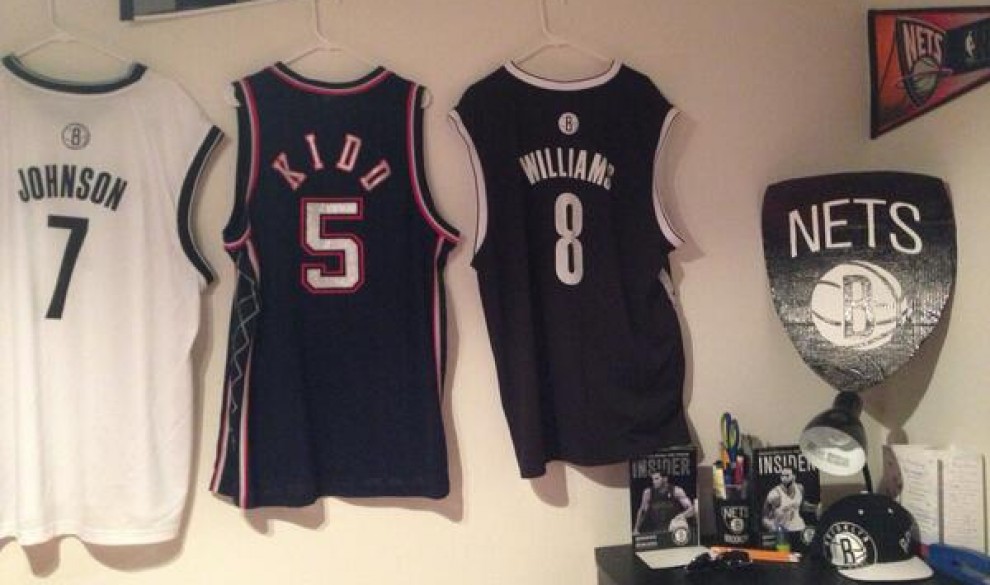


Nets Free Agency Options: Pistons and Bucks Rosters

As the Brooklyn Nets continue their 2015-2016 season, I continue my look at free agents around the league, team by team, to evaluate who the Nets could be interested in.  The series continues with a look at the Pistons and Bucks, which will conclude my look at the Atlantic and Central Divisions

#

Free Agents


Andre Drummond: Drummond is a free agent in name only.  He is a restricted free agent who chose not to sign a preseason extension.  Detroit is building around him and will not decline to match an offer.  The Nets surely can place a call to his representation and with a talent of his level, they had better.  But the likelihood he leaves Detroit is remote.


Brandon Jennings: Jennings is an unrestricted free agent, and the Pistons gave Reggie Jackson $80 million to play his position.  He could be on the move.  And the Nets obviously need a point guard: Jennings is a clear upgrade over Jack and Larkin and the Nets will likely express some interest.  Still, it must be noted.  Jennings is extremely popular in a manner that exceeds his production.  He has never shot 42% in a season. The Bucks were clear winners when dealing him away, the Pistons ready to cast him away.  He’s a bottom tier starter at this point.  But he is worth a look if he is affordable.


Ersan Ilyasova: The Pistons have a team option to retain Ilyasova, who has fit well next to Andre Drummond, and Stan Van Gundy has stated his intent to keep him around.  If he chooses not to keep Ilyasova, he is unlikely to be a target, as he plays Thaddeus Young’s position and is going to command $10-$15 million per season when he hits the market.


Jerryd Bayless: Bayless is a solid piece the Nets can look at to fill their guard rotation.  He’s shooting 43% from 3. As the Bucks have dealt with ups and downs from MCW, he has been reliable in relief, and spot starting on occasion.  And given he is a career reserve at this point, he may have reasonable salary demands.  Can Lionel Hollins and Bayless move past this?


Johnny O’Bryant:  O’Bryant is a second round pick from 2014, who plays hard, plays with purpose, and has snuck his way into the back end of Jason Kidd’s rotation.  With just a $980,000 team option for 2016-2017, I expected the Bucks to keep him.  If they do not, he can be an intriguing fourth or fifth big in Brooklyn, should the Nets want him.


Miles Plumlee:  Plumlee’s value has plummeted in Milwaukee; he is barely playing, and the Bucks made him available, according to ESPN, in trades.  Still, Plumlee is a young piece.  Development is not linear, and he started 79 games in 2014 for a 48 win Suns team.  He is an intriguing buy low candidate for Brooklyn. While he is a prospective restricted free agent, the Bucks may renounce him given their current stance on looking at deals.  Even if they do not, he is a player they may balk on matching on.


OJ Mayo: Mayo is never a player that has impressed me.  He’s shooting 39% this season, and finds himself distinctly behind multiple players in the Bucks’ hierarchy.  I think they’ll let him walk, and for good reason.  I do not see him as someone the Nets should be interested in.  He’s been around the block now with several teams and is yet to show he is a true NBA starter.  And if the Nets keep Hollins, the relationship there is poor.


Greivis Vasquez: Vasquez has been a disappointment in Milwaukee.  He was a very useful reserve guard for Toronto the past two years, but is struggling mightily this year.  Jason Kidd wanted the big guard and dealt a 2017 first for him, so he may decide to hold onto him.  He makes $6.6 million, and may command that figure again this summer.  For a clear reserve, I do not believe he is worth it.


Damien Inglis: There could be traction for the Nets to look at here.  Inglis is a forward who can play the 3 and 4.  While he has not done anything as a second rounder in Milwaukee, there are some who like his potential.  The Bucks have a $980,000 team option and, given how small it is and the fact Inglis has upside, they should exercise it.  If they do not, the Nets may look into offering him a back end roster spot.


Anthony Tolliver: Tolliver is a decent role playing reserve at the 4, but the Nets should look elsewhere.  Tolliver is at best average defensively, and his best skill – shooting the basketball – isn’t that great of a strength, as he is a 35.6% three point shooter and 41% shooter overall, for his career, with similar or worse numbers the past two seasons.  Tolliver could be a fringe rotation player in Brooklyn but is certainly no priority.


Steve Blake: Blake is a heady backup guard, but is on the decline, and is shooting under 40% (low) and approximately 33% from 3 (relatively low) on the year.  The Nets also had him, as he came in the RHJ deal, but quickly dumped him for Quincy Miller, who did not even make the team.  That is indicative of the Nets’ opinion of his services.


Darrun Hilliard: A second rounder, Hilliard has shown nothing early in his career.  The Pistons have an $875,000 team option to retain him and I suspect they will permit him a second developmental year at such a low figure.  A young swingman, at a spot where the Nets have need, perhaps they express interest in the event Detroit lets him go.


Chris Copeland: Copeland never lived up to the contract he received after his breakout 2012-2013 in New York, and has not recovered from a stabbing which occurred in April, 2015.  Copeland is likely not a player the Nets will show any interest in.


Spencer Dinwiddie: Dinwiddie was a popular second round pick, but is barely getting playing time in Detroit, and is struggling shooting the ball, particularly from 3.  The Nets have enough fringe youth on the roster that Dinwiddie should not be a priority.  The Pistons do have a $980,000 team option to retain him.


Joel Anthony: Anthony is essentially finished as an NBA player.  The Pistons have a $2.5 million team option they really should decline. The Heat traded draft picks just to dump Anthony in 2014.  He is truly not rosterable at this point.


Trades: You would be hard pressed to find one that makes sense between the Nets and these two teams.

Nets Free Agency: Pacers and Bulls Edition

With the new year here, it’s officially the year of the Nets having cap space to spend on importing talent, for the first time since 2011.   On this site, we have looked around the league at free agents, and who the Nets may be able to pry. Today, we take a look at two teams’ free agents: the Bulls and Pacers. We also look at trade options between the Nets and

Free Agents

Pau Gasol: Gasol is a hall of famer, and is still a fantastic big in Chicago. He has a $7.8 million player option, and there is no way he should exercise that. He likes Chicago and may exercise it, or resign long term. I expect Gasol to stay in Chicago. If he should leave, Pau has been with mostly great or very good teams since 2008, and I do not expect him to migrate to Brooklyn to join a team hopefully on the rise, but clearly not at title caliber level at the moment.

Joakim Noah: Noah was the heart and soul of the Tom Thibodeau Bulls, but these are not those Bulls. Noah is coming off the bench in Chicago, playing under 25 minutes a night.  He is not the same athlete he was when he ripped hearts out of Net fans’ sockets during the 2013 playoffs. He still has value, and can help a contender. Chicago has flexibility to keep him, and may indeed do so, but he may look elsewhere now that the Chicago he knew has changed. Any team can use Noah, but Lopez is entrenched at center and the Nets should focus their resources elsewhere.

Ian Mahinmi: Mahinmi has evolved into a nice rim protector who can finish near the basket in Indiana.  He is poised to get a decent payday this summer, however, and not likely to wish to revert back to a reserve role.  The Nets will likely look to spend at another position, but Mahinmi is a nice big man for a playoff team right now.

Aaron Brooks: Brooks is a decent reserve guard, and has been productive as a Bull. He is an unrestricted free agent. I expect the Bulls to look to keep him, but nothing is every certain, particularly with reserves. And if the Bulls look to trade Derrick Rose, there could be many changes in store in Chicago, which often leads to the dispersing of role pieces like Brooks. The Nets have reserve caliber guards in house, but if Shane Larkin leaves with a payday, he could be a cheap replacement.

Jordan Hill: Hill is essentially a third or fourth big on a good team, depending on whether the team plays big or small.  He could be a useful add for the Nets, particularly if he has reasonable salary demands, given the way he has bounced around the league.

Solomon Hill: Hill is a nice defensive wing, and it was surprising when the Pacers did not pickup his small team option for next year.  Still, perhaps that should be a sign.  Hill in his third season still has little in the way of an offensive game, and is struggling to see playing time.  On the other hand, however, the Pacers’ commitment to their new small ball attack was served by adding numerous quality wings which made Hill a numbers crunch victim.  The Nets are weak at the wing, and Hill has little power to command a big salary number — there could be a match here.

Kirk Hinrich: Hinrich is a catchy name because he has been around for a long time.  He is declining, however, and is not who he was when the Nets lost to the Bulls in the 2013 playoffs. Hinrich can fill a role as a pest of a defender, and hard nosed player, the ilk of which you tend to see on playoff teams.  Hinrich is worth a look on a short, tiny contract if the Bulls move on.

E’Twaun Moore: Moore is a fringe rotation guard.  He has showed some ability to score, but has never consistently earned NBA minutes.  The Nets likely will show little interest in his services next summer.

Glenn Robinson, III: Robinson barely plays in Indiana, but there may be something here. He is averaging 14.4 points on 52% shooting per 36 minutes, and the Nets do need better guard play. He may be worth a look on a minimum deal as an end of the bench young player. The Pacers may exercise their team option of a touch over $1 million, but with players this far down the roster, that is never a guarantee.

Chase Budinger: Budinger is a wing with a reputation for doing little, other than shooting the 3 (which he is not even doing well this year), and, frankly, getting hurt. There is little to see here, in essentially a lesser version of Wayne Ellington.

Cameron Bairstow: The Bulls have an $980,000 team option on Bairstow’s contract. He never gets minutes, and will be fighting to stay in the NBA next summer. I do not expect the Nets to be looking to bring him aboard.

Cristiano Felicio: Felicio is even closer to the fringe than Bairstow, and the Bulls have a $875,000 team option here. There is likely nothing to see here from a free agency standpoint.

Shayne Whittington: Whittington is the last guy on the Pacers’ roster, and he may not be in the league next year, regardles off the Pacers $980,000 team option. The Nets likely pass.

Trades

Joe Johnson, Bojan Bogdanovic, and Shane Larkin for Derrick Rose, Kirk Hinrich, and Cameron Bairstow. — If the Nets are to dump Joe Johnson, this may be their only shot. The Bulls, it appears, wish to move on from Rose. This deal would provide them with the opportunity to do that. The Bulls should not make a deal like this. If they deal Rose, they should get more back than fringe youth in a package like this. And Rose expires in 2017 — why make a downgrade this significant just to dump him. Still, if the Bulls look to dump Rose, there may not be many suitors, given his contract and the glut of talent across the NBA at point guard. That could open a door for Brooklyn. The Nets have so much cap space next summer that they could do a deal like this, and still have plenty of money to spend on free agents.  Placing a call wouldn’t hurt.

Jarrett Jack for Solomon Hill and Lavoy Allen — Hill is out of the Pacers’ rotation, and given they declined his small 2016-17 team option, out of their plans. Still, he was picked in the 2013 first round.  The Nets would be providing the small ball Pacers with another at least competent small in Jack, while giving themselves a look at Hill.  Allen is not in the Pacers’ plans either but makes $4 million in 2016-17, so Indiana would also open some future flexibility. Perhaps the Nets could leverage a future second or even a first in this deal, although a first is perhaps reaching.